
Pistachio flour introduces a world where flavor and nutrition come together in a single ingredient. It’s finely ground pistachios turned into a powder that adds depth to recipes without the heaviness of traditional flour. In this recipe, you’ll mix that vibrant, slightly sweet nut powder with almond flour, sugar, egg whites and optional green coloring, then fold everything into a glossy meringue, pipe tidy circles, let them rest, and bake until they puff just right. The process brings pistachio flour to life, marrying its nutty aroma with the light chew of a meringue shell.
When you taste the final result, you’ll find shells that are crisp on the outside, tender inside, and bursting with pistachio depth. The filling often a pistachio buttercream or ganache, amplifies that nuttiness, bringing creamy richness to every bite. The finished pistachio flour cookies are elegant, subtly sweet and reliably satisfying, a treat that looks as good as it tastes.
Your recipe rewards patience: smooth shells with delicate “feet” a vivid green tint (if added), and a balanced nutty sweetness. Each cookie melts in your mouth, leaving behind just enough texture and the unmistakable essence of pistachio flour baked into something unforgettable.
Check out this guide on how to make pistachio paste if you’re curious about using pistachios in more than just flour.

Table of Contents
What is Pistachio Flour?
Definition and Origin
This is exactly what it sounds like, flour made by grinding shelled pistachios into a fine, soft meal. Unlike traditional wheat flour, it contains no gluten, which makes it a go-to for people with gluten sensitivities or those following grain-free diets. What sets it apart isn’t just its dietary perks, it’s the natural, nutty flavor that adds depth to both sweet and savory recipes.
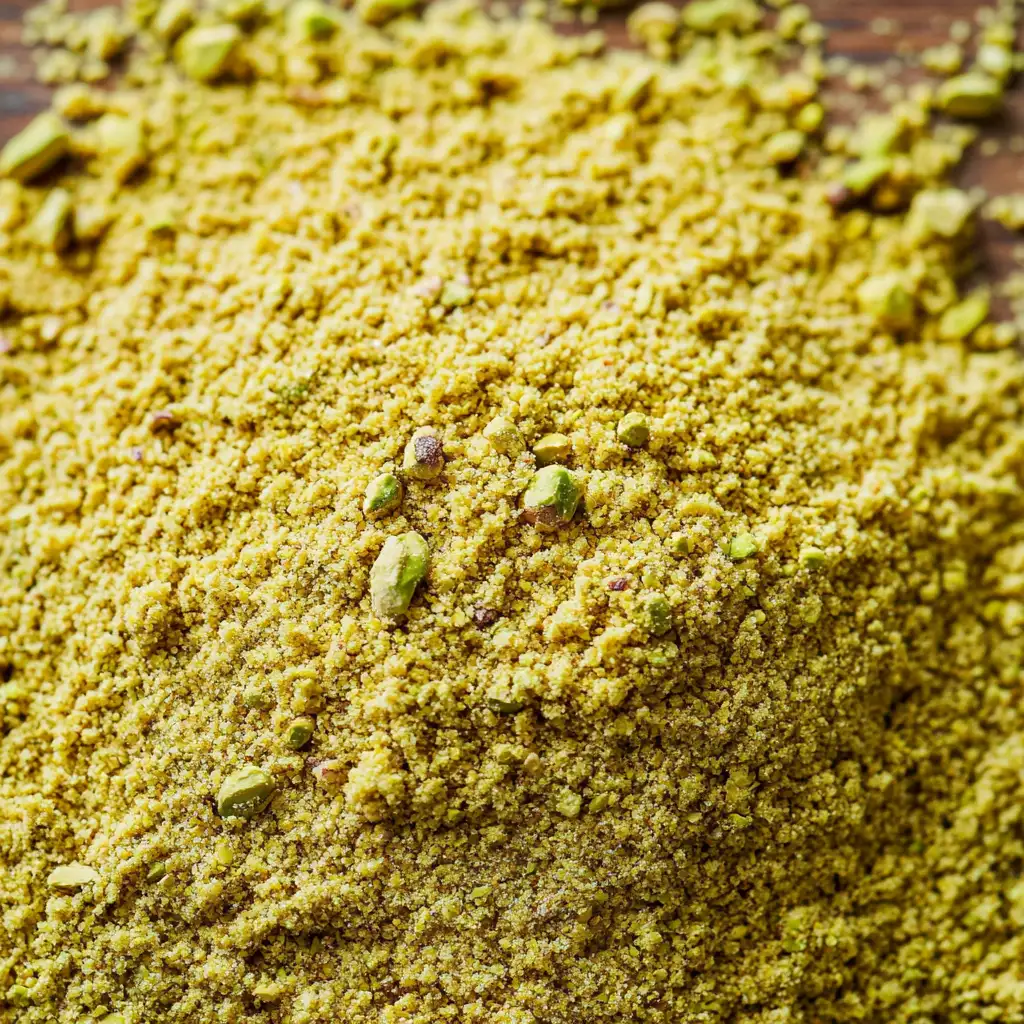
The process starts with raw or roasted pistachios, which are blended into a fine powder. Some versions keep the skins on, lending a slightly deeper color and earthy flavor, while others are more refined for a lighter texture. Either way, the result is a protein-rich flour that’s as colorful as it is tasty.
Nutritional Profile and Health Perks
Pistachio flour doesn’t just taste good, it brings real nutritional value to the table. It’s rich in plant-based protein, heart-healthy fats, and dietary fiber. You’ll also find key vitamins like B6 and E, plus minerals like potassium and magnesium.
Here’s a quick snapshot of the nutritional highlights per 1/4 cup (about 30g):
| Nutrient | Amount |
|---|---|
| Calories | ~170 |
| Protein | 6g |
| Total Fat | 13g |
| Fiber | 3g |
| Net Carbs | ~4g |
| Vitamin B6 | 20% DV |
| Magnesium | 15% DV |
Because it’s low in carbs and high in good fats, pistachio flour fits well into low-carb, keto, and Mediterranean diets. It can help support steady blood sugar levels and offer sustained energy, especially when compared to refined white flours.
Print
Pistachio Flour: A Nutty, Nutrient-Rich Flour You Need in Your Pantry
A flavorful, gluten-free alternative made from ground pistachios, perfect for sweet and savory recipes alike.
- Total Time: 10 minutes
- Yield: 1 cup flour (approx.)
Ingredients
- Raw or roasted shelled pistachios (to grind into flour)
- Airtight container for storage
- Optional: almond or coconut flour for blending
Instructions
- Start with raw or roasted shelled pistachios.
- Blend pistachios in a food processor or high-speed blender until a fine meal is formed.

Finely ground pistachio flour ready for use - Sift to remove larger pieces for a smoother texture if needed.
- Store flour in an airtight container away from heat and light.
- Refrigerate or freeze to extend shelf life.
- Use in both sweet and savory recipes: cookies, muffins, crusts, sauces, or dips.

Finely ground pistachio flour ready for use
Notes
Pistachio flour is naturally gluten-free and rich in protein, fiber, and healthy fats. Best stored in the fridge or freezer to maintain freshness.
- Prep Time: 10 minutes
- Cook Time: 0 minutes
- Category: Pantry Staple
- Method: Blended
- Cuisine: Universal
Nutrition
- Serving Size: 1/4 cup
- Calories: 170
- Sugar: 2g
- Sodium: 0mg
- Fat: 13g
- Saturated Fat: 1.5g
- Unsaturated Fat: 11g
- Trans Fat: 0g
- Carbohydrates: 7g
- Fiber: 3g
- Protein: 6g
- Cholesterol: 0mg
How to Use Pistachio Flour in the Kitchen
Baking With Pistachio Flour
Pistachio flour is a star in baked goods. It adds a naturally rich flavor and beautiful green tint to cookies, cakes, muffins, and breads. Because of its high fat content, it helps create moist, tender textures, especially in gluten-free recipes where dryness can be a challenge.
You can use it on its own in some recipes, or mix it with other flours to improve structure. For example, blending it with almond flour or coconut flour helps balance moisture and texture. It pairs well with ingredients like dark chocolate, citrus zest, honey, and vanilla.
Discover great ideas like these pistachio cheesecake bars for a delicious way to start baking with this nutty flour.

Savory Recipes and Creative Uses
Don’t stop at desserts. Pistachio flour also shines in savory dishes. It makes a great crust for chicken, fish, or lamb, just mix it with breadcrumbs or use it solo for a nutty, crunchy coating. It also works as a thickener for sauces or as a flavorful binder in veggie burgers and meatballs.
Try stirring it into soups for added richness or blending it into dips like pesto or hummus. It adds body and a toasty, nutty punch that you just can’t get from regular flours.
Whether you’re making a sweet treat or spicing up a dinner recipe, pistachio flour gives you more flavor and nutrition in every bite.
Pistachio Flour vs Almond Flour
Flavor, Texture, and Appearance
Pistachio flour and almond flour often get compared because they’re both made from nuts and used similarly in recipes. But they’re definitely not the same.
Flavor-wise, pistachio flour brings a more pronounced, earthy taste compared to the mild, slightly sweet profile of almond flour. That difference alone can change the outcome of a recipe, especially in baked goods where flavor matters.
Texture is another factor. Pistachio flour tends to be a bit coarser unless it’s finely ground. Almond flour, on the other hand, is typically more consistent and powdery. This makes almond flour a bit more predictable in baking, but pistachio flour adds a unique touch that almond flour simply can’t replicate.
Substitution Tips and Recipe Adjustments
Yes, you can usually swap pistachio flour for almond flour at a 1:1 ratio, but be aware of some differences in moisture and fat content. Pistachio flour is a bit richer and can make baked goods denser or softer than expected.
If you’re testing a recipe swap, start small. Try using pistachio flour in half the amount called for almond flour, and combine it with another flour (like oat or coconut flour) to balance the texture. This works especially well in recipes like cookies, muffins, or pancake batter.
Also, be mindful of color and flavor shifts. Pistachio flour brings a lovely green hue and nutty bite that will stand out, especially in light or citrus-based recipes.
Looking for inspiration? Try our guide on how to make pistachio paste for another creative way to use this flavorful nut.
Why Is Pistachio Flour So Expensive?
Farming and Production Costs
Pistachio flour isn’t just a specialty item, it comes with a specialty price tag. The cost starts with the pistachios themselves. Growing pistachios is a slow, labor-intensive process. Trees take years to mature and need just the right conditions to thrive, typically in arid climates with long, hot summers.
Once harvested, pistachios require careful processing, removal from shells, cleaning, roasting (if desired), and grinding into flour. The yield is lower compared to larger nuts like almonds, meaning more raw material is needed to produce the same amount of flour.
Add in the fact that pistachios are already one of the pricier nuts on the market, and it’s no surprise that the flour made from them is on the high end too.

Quality, Demand, and Niche Appeal
Another reason for the higher cost is quality. Pistachio flour is often produced in small batches to preserve freshness and flavor. It’s also a niche product, which means it doesn’t benefit from mass-market pricing like wheat or even almond flour.
Demand is growing, especially among gluten-free bakers and those following low-carb or plant-based diets. This rising popularity drives prices even higher, especially when paired with limited supply.
So yes, pistachio flour is more expensive, but it’s a premium ingredient that brings both nutrition and a unique flavor to your recipes.
Don’t miss our creative dessert guide with pistachio cheesecake bars, you’ll see why this flour is worth the splurge.
Health Benefits of Pistachio Flour
Nutrient-Dense and Heart-Friendly
Pistachio flour packs more than just flavor, it brings serious nutrition to the table. It’s rich in unsaturated fats, the kind that support heart health by helping lower LDL (bad cholesterol) and boost HDL (good cholesterol). If you’re cooking with your health in mind, this is a smart ingredient to keep on hand.
It’s also a good source of plant-based protein, which supports muscle health and keeps you feeling full longer. And thanks to the high levels of potassium and magnesium, pistachio flour contributes to better blood pressure regulation and reduced risk of cardiovascular issues.
Supports Blood Sugar and Weight Management
With fewer net carbs than many grain-based flours, pistachio flour is a good fit for low-carb and diabetic-friendly diets. The combination of protein, fiber, and healthy fats slows digestion, helping to keep blood sugar stable after meals.
It can also be helpful in weight management. That feeling of fullness you get from pistachio flour-based dishes can reduce the temptation to snack or overeat later on. It’s a small change that can make a big difference over time.
Whether you’re using it in breakfast muffins or a savory crust, pistachio flour is more than just a flavorful addition, it’s a nourishing one too.
How to Store It Properly
Best Practices for Freshness
Because its contains natural oils, it can go rancid faster than grain-based flours if not stored correctly. The key is to protect it from heat, air, and light.
After opening, always transfer pistachio flour to an airtight container. A dark glass jar or BPA-free plastic container with a tight lid works well. If you buy it in bulk, divide it into smaller containers so you don’t expose the whole batch to air every time you open it.
Refrigeration and Freezing Tips
To make pistachio flour last longer, refrigeration is your best bet. In the fridge, it’ll stay fresh for about 4 to 6 months. For even longer storage, the freezer can extend its life up to a year.
Just make sure the flour is sealed well to prevent moisture from creeping in, and always bring it to room temperature before using it in recipes to avoid clumping.
Here’s a quick storage guide:
| Storage Method | Shelf Life | Notes |
|---|---|---|
| Pantry | Up to 1 month | Keep in a cool, dark spot |
| Refrigerator | 4 to 6 months | Use airtight container |
| Freezer | 6 to 12 months | Thaw before use to avoid condensation |
With a little care, your pistachio flour will stay fresh and flavorful, ready for your next batch of cookies or savory crust.

Frequently Asked Questions
What is pistachio flour used for?
Its commonly used in baking and cooking to add a nutty flavor and moist texture. It works beautifully in cakes, cookies, muffins, and pancakes. On the savory side, it’s a smart choice for crusting fish or chicken, thickening sauces, or adding richness to dips and soups.
Why is pistachio flour so expensive?
The cost comes down to supply and production. Pistachios are more expensive to grow and harvest compared to other nuts. Turning them into flour adds even more processing steps, including shelling, grinding, and packaging. Since it’s a specialty ingredient with rising demand and limited mass production, the price tends to stay high.
Are pistachio powder and pistachio flour the same thing?
They’re similar but not always identical. Pistachio flour is usually a bit coarser and intended for baking or cooking. Pistachio powder may be more finely ground and used in drinks, desserts, or garnishes. Depending on the brand, the terms can be interchangeable, but always check the texture if your recipe is sensitive to moisture or consistency.
Can I substitute pistachio flour for almond flour?
Yes, its can often be substituted for almond flour at a 1:1 ratio in many recipes. However, the flavor and texture will differ. Pistachio flour is more robust and slightly oilier, which may require small adjustments in recipes, especially in delicate baked goods. Try a test batch first and adjust as needed.
Looking for inspiration? Try this creamy twist: Pistachio Cheesecake Bars for a creative way to use pistachio flour in desserts.
Conclusion
Pistachio flour isn’t just another trendy ingredient, it’s a genuinely useful, flavorful, and nutritious flour alternative. With its bold nutty flavor, green color, and impressive health benefits, it brings something special to both sweet and savory recipes. Whether you’re baking gluten-free cookies, crusting a piece of salmon, or experimenting with global dishes, This recipe offers versatility and character that most other flours can’t match.
Yes, it’s more expensive, but what you get in return is quality, nutrition, and a new layer of creativity in your kitchen. From traditional Middle Eastern sweets to modern American baked goods, pistachio flour bridges old-world flavor with modern health-conscious cooking.
Don’t miss our guide on how to make pistachio paste, a great complement to your flour experiments.
Follow us on Facebook for daily cozy meal ideas. Our Pinterest boards feature plenty of easy, delicious recipes to keep things fresh in the kitchen.